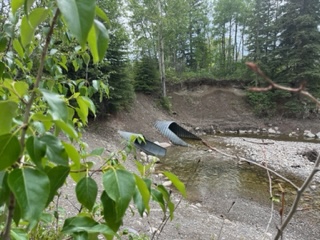
Hardisty Creek Revisited

Hardisty Creek — the legendary, Huck Finn, Tom Sawyer river of my youth. This was my personal Mississippi and River Nile, a place of wonder and enchantment, a realm of great adventures, mortal danger and endless hours of swimming, fossil hunting and fishing. Along its shores were strange lands and dark forests for exploring and secret places where you could find the ideal willows for making sling shots and fishing poles. And now the fish are returning to Hardisty Creek,,,, Aaaah, it is now finally time for me to revisit this noble stream and to pay tribute for the many hours my friends and I spent exploring it.
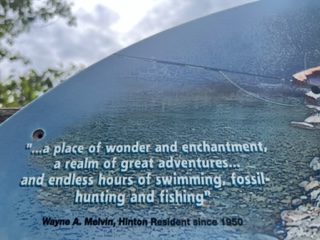
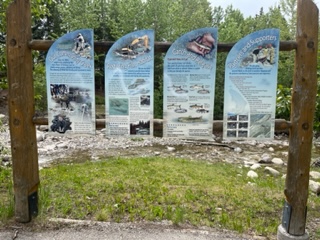
Spring thaw on Hardisty Creek meant breaking slabs of ice free to watch them float downstream and gumboots full of slush and ice water. Then came the great floods with whirlpools and rumbling rocks and swirling brown waters carrying huge trees downstream towards the Athabasca River. The spring rains also filled a pond near the creek with stagnant brown waters (now paved over for the Crescent Valley School parking lot). There we built a dock and kept a flotilla of rafts. Great naval wars ensued that would have been the envy of any armada or pirate fleet. On the way home from the Roxy Theatre after a Saturday matinee, the “Park” along the creek, now known as Kinsmen Park, was transformed into the lands of Sinbad, or Tarzan’s jungle, or the Wild West.
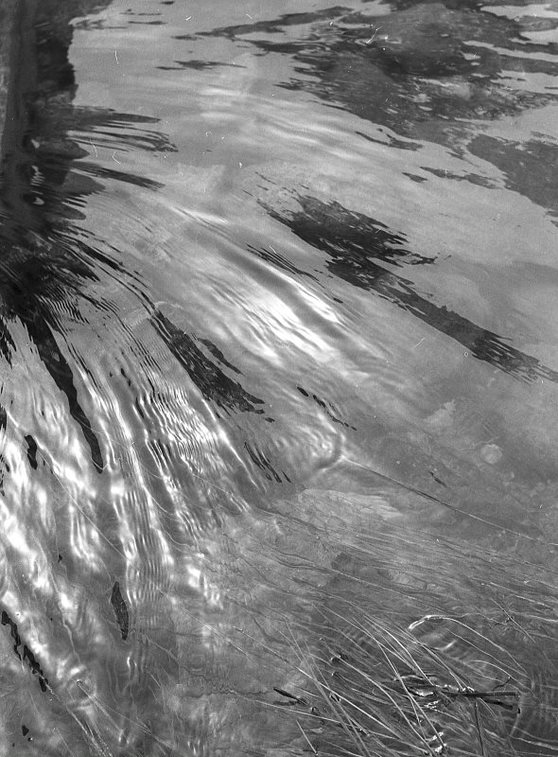
The irresistible temptations that the creek offered meant general assemblies at school were filled with countless warnings about its many dangers. These speeches were inevitably followed by strapping or detentions (worse punishment by far) for those of us who were hard wired by nature to disobey Principal Jack Appleyard’s warnings and threats. But after detention – the creek was always still there enticing us with new adventures around every bend. There were few of us that could resist its primal lure.
By late August there were only small pools left in a nearly dried out creek bed – now good only for the hunting of stick bugs under slime-covered rocks, still an honourable pursuit in those days. But after the floods and before the waters turned into a trickle of tepid water there were the endlessly long Alberta days of summer spent meandering up the creek.
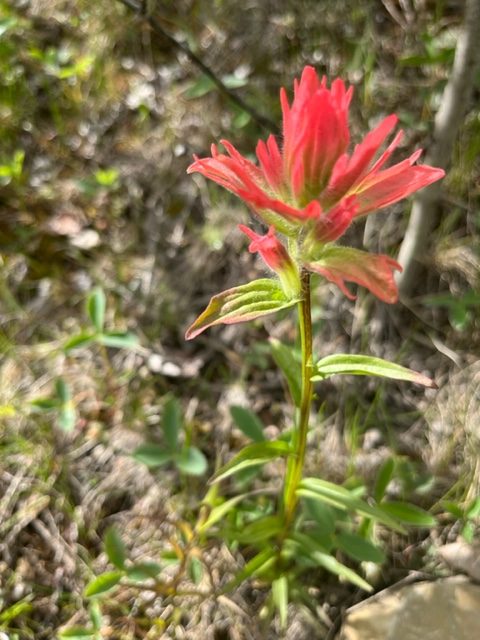
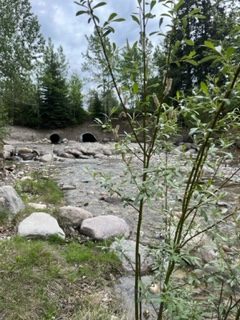
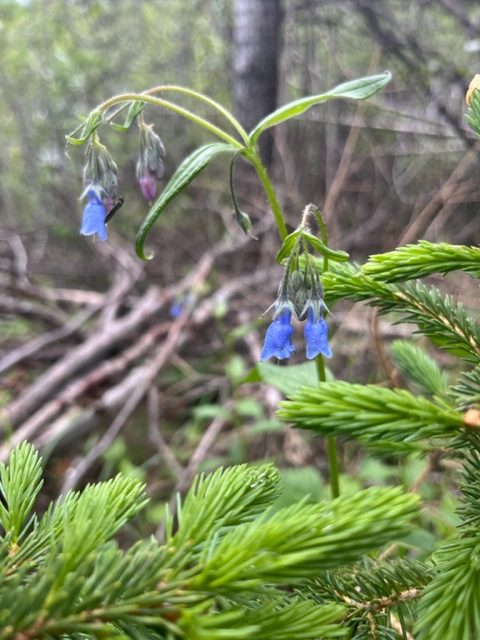
I recall the timber bridges that once crossed over the creek. And then there were the cool, dark culverts that passed under the CNR tracks. After scampering up the waterfall you entered the tunnels that soon reverberated with shouts and echoes. Beyond the railroad was Sandy Flats with caves dug in the tangle of roots under the overhang of cliffs and the sweet smell of pines all around. From the railway itself we could see the Rockies beckoning in the west and to the north stretched the green hills of the Athabasca River valley. Every time we passed the borderland of the railroad, either going over or under, we entered into a hidden world – no adults ventured here. This was our realm, a land of freedom – and mystery.
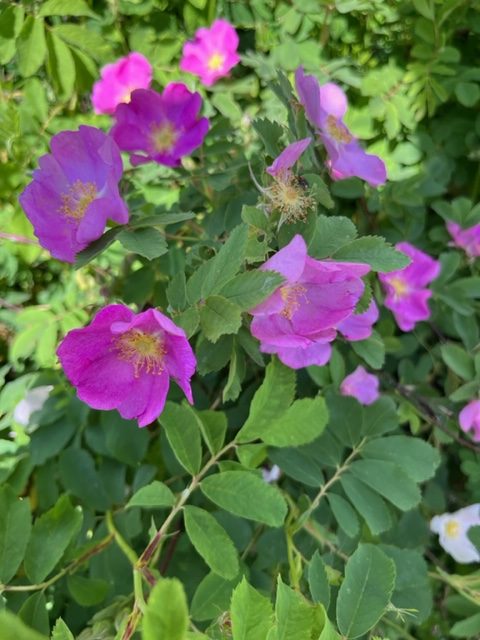
With every expedition into Sandy Flats we always looked around for the mysterious silver artifact we found hidden in a thicket of buck brush and silver willows. Many attempts were made to decipher the engraving on it before it was tossed back into the bush until the next time we entered this lost kingdom. Great discussions and heated debates of its origin and secret meanings continue to this day. Some naysayers insist it was nothing but a flattened bowling trophy but I know it came from the throne room of an Egyptian pharaoh, how it made its way from the banks of the Nile to the banks of Hardisty Creek in Hinton is not entirely clear but I’m still working on the mystery.
Beyond the tracks there was also danger, real danger that our parents still don’t know about more than 40 years later (well, at least not until now). There were cave ins on the cliffs, falls from tree forts and many near drownings and numerous incidents with fishhooks, sharp knives and dull hatchets. We were chased by herds of horses and in return we chased bears armed only with fishing rods and loud shouts and the mindless bravado of young boys. Detours to old coal mine workings meant crawling down long-abandoned mine shafts with rotten timbers dripping with ooze, and instant death looming nearer with every footstep into the impenetrable blackness. I still break out in a cold sweat whenever I think about some of the stupid things we did back then. Even Huck Finn had more sense.
Beyond Highway 16 and the Nuisance Grounds (where black bears were always lurking and often seen) lay the ultimate destination for many of our treks. The Beaver Dams. There, in a series of pools held back with bleached white sticks and dank smelling mud, swam elusive and boy-wary rainbow trout hiding under slippery logs. Once sufficiently humbled by fish that showed complete disdain for our grasshopper bait and utter contempt for our red spinners, we would strip down to our gaunchies for a swim or a mud fight in the murky waters. Afterwards there were grassy banks for snoozing and sunburning and the eating of squashed sandwiches and warm oranges. This was followed by a slurp of swamp water and then the telling of stories and the age-old and very earnest competition of Braggin n’ Boasts.
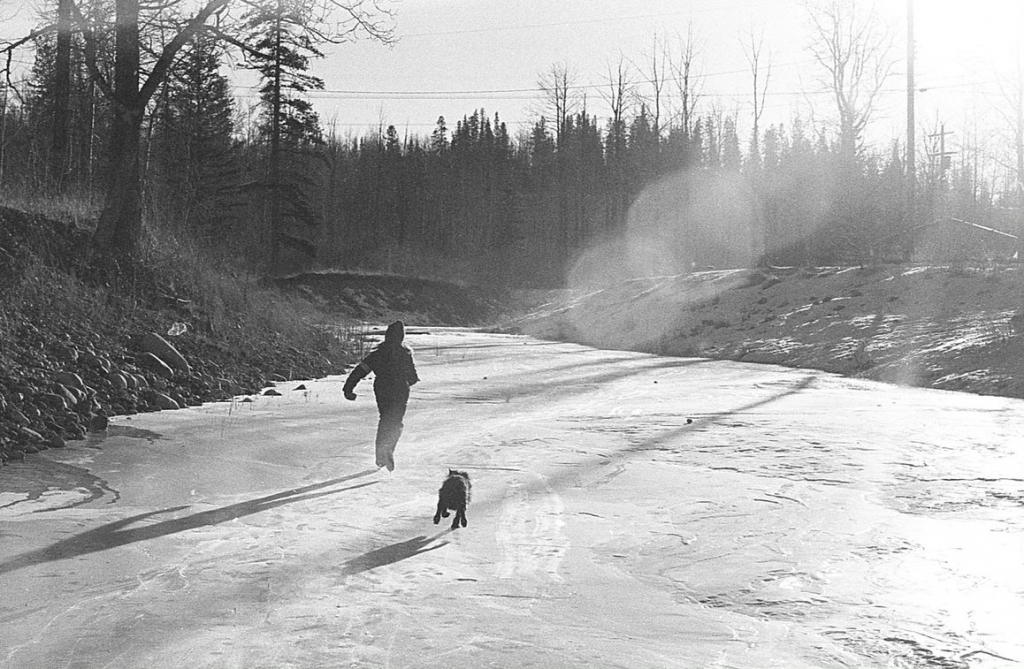
In the fall came the agonizing return to school with longing glances at the creek now filled with the swirls of golden poplar leaves. It lay deserted, forsaken by the dozens of kids that only days before had played from morning to late at night along its banks. Now we trudged by burdened with arithmetic homework and the weight of the world upon our shoulders – at least until the first freeze. Then there was fresh clear ice for crunching and cracking and breaking into huge record-breaking sheets.
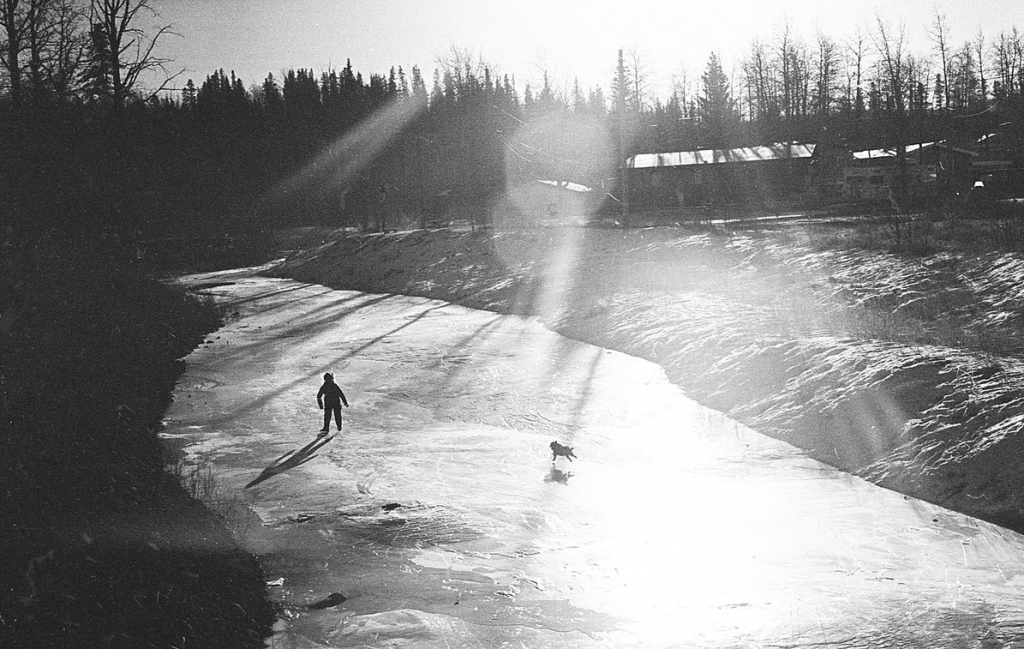
With winter came skating on small misshapen ponds with hidden rocks and towering pressure domes and freezing water traps. Having the downhill advantage meant rattling down frozen rapids chasing the puck until your teeth chipped. For those stuck with the uphill handicap it often meant climbing up the creek on hands and knees while being teased and tormented by your opponents. (You always kinda preferred to have the downhill advantage, but some of us somehow never did.) Inevitably came frozen feet and pants and mitts caked in ice and fingers too numb to untie the laces on your skates. Many a frozen hockey player was seen clattering home along Hardisty Avenue in their skates with nose dripping and sparks flying in their rush to beat curfew and to thaw their blue lips and icicle bones.
Whatever the season, Hardisty Creek offered up endless hours of adventures. Many years have passed since I swam and skated and fished there and I am now told that seventy fish have been counted in its waters – seventy — and I know exactly where to cut the perfect fishing pole. OK, OK. Don’t panic! You’re not likely to find me jigging in my favorite fishing hole, even though those plump beauties are waiting just for me. No, they can live in peace forever as far as I’m concerned; they’ve earned the right. Besides, I never could stand the humiliation those wily Hardisty Creek fish inflicted on me over the years. And, if the truth be told, it would take a heck of a lot these days for most of us former fishermen and adventurers just to catch the grasshoppers — let alone the fish.
Thank you Richard McCleary and Foothills Model Forest and the people of Hinton for restoring Hardisty Creek to its former glory.



2 Comments
Ruth Anne
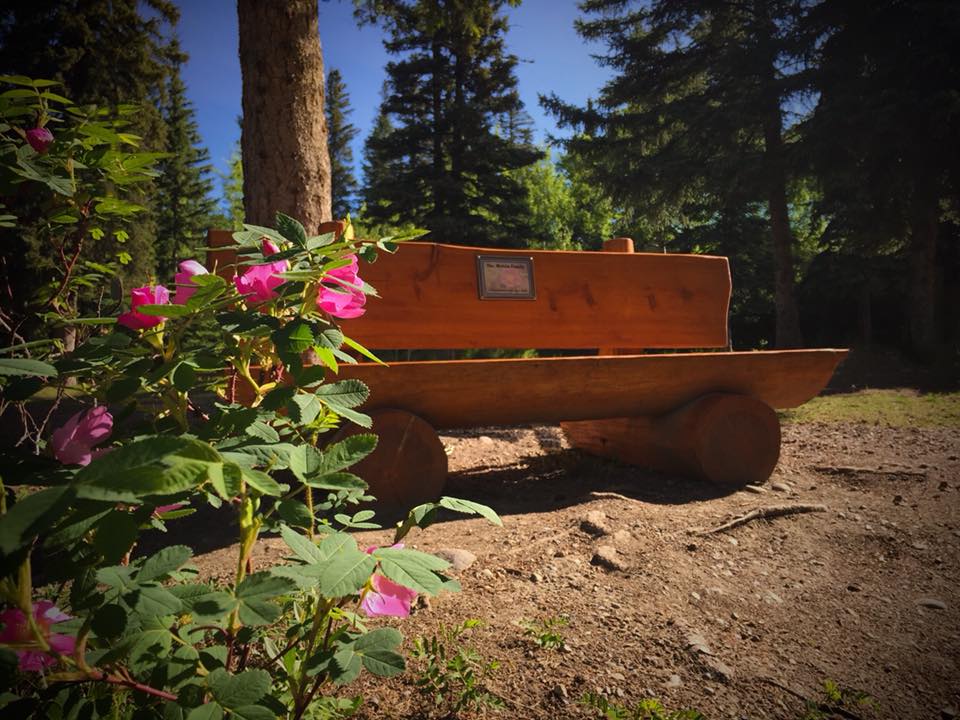
I love this story of Hardisty creek! I had the privilege of visiting the creek with Joan a few years back and and actually got to sit on the beautiful bench you posted at the end of your post.
Barry Hunt
Thanks Wayne, for the memory of growing up in Alberta and the fascination we have for water and all the stories it inspires!