
Life In the Time of Lilacs
Eternal Echoes: Exploring Our Hunger To Belong
“When one flower blooms spring awakens everywhere.”*
Springtime in Alberta is a much-welcomed event. Months of bitter cold, ice and snow, and brutal northerly winds slowly give way to dancing pussy willows along the creeks and river bottoms and the greening of poplar, aspen and birch trees and then the first tentative wildflowers – their sighting a moment of great exultation. Also on farmsteads, and yards in villages and cities, Spring also takes slowly hold. Mother Earth redeems herself with this annual renewal and rebirth and the hardship of winter is soon forgiven. We survived! We live!
In my maternal grandparent’s yard, in the rural hamlet of Evansburg about sixty miles West of Edmonton, Clara and George McGowan grew the five essential plants required of every Alberta pioneer – yellow caragana, rhubarb, roses, Iceland poppies, evening scented stock and, of course, lilacs. These hardy species were planted by the first homesteaders throughout the Prairie Provinces to bring some colour and cheer into their lives come Spring. The rhubarb, and even the caragana, were edible, but the other flowers had no utilitarian value. They were planted simply for their beauty, their fragrance and their ability to uplift the spirit and bring joy to a life that was often otherwise filled with hard work and the struggle to survive in a difficult and often unforgiving land.
I loved the simplicity, and yet absolute magnificence, of these five beauties. Each in their own way inspired a sense of wonder in me. I couldn’t believe that something so seemingly fragile could survive the deep winter and burst forth from the frozen earth, thick clay and black muck of this former coal-mining town in such a celebration of colour, fragrance and life. While I marvelled at them all, springtime in Alberta, for me, was Life in the Time of Lilacs.
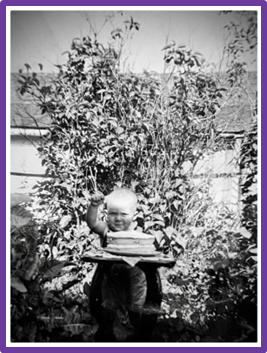
Credit: Joan Melvin, Melvin/McGowan Family Archives
When you travel throughout Canada you will often see tall, purple and mauve lilacs growing amongst the planted windbreaks of spruce and willow trees, weathered houses and dilapidated barns that once graced the houses and farms of early pioneers. While the original owners have often long since passed and their children or grandchildren have moved on to the Big City or grander homes, they have left a colourful and fragrant legacy to mark their passage. (Wild lilacs even grow along the steep cliffs and river banks below the Parliament buildings in Ottawa.) But the lilacs were also strangers to this place, far from their origins in the Balkans, and even, Persia (modern day Iran). Canadian poet Al Purdy must have noticed this proliferation of lilacs throughout the country when he customarily snarked, “the whole world smells of lilacs/the whole damn world.”
Syringa vulgaris, the common lilac, has been traced to wild bushes growing on the dry hillsides of the Balkan peninsula, a region of 11 countries in Eastern Europe, including Bulgaria. The lilac is part of the oleaceae family, which includes olives, ash and jasmine. Its appearance in cultivation dates to the 15th Century, while the first mention of “lelacke” trees in English was in 1625. By the 18th century they were found throughout Europe and much praised in art and literature.

The word “lilac” itself likely comes to us from the Persian word “līlak,”, meaning “bluish”, or lilanj, referring the colour of some varieties to the blue dye obtained from indigo plants. The variety of lilac growing in the Middle East, Syringa × persica, was propagated in the gardens of sultans who wanted to create an earthly vision of Paradise, or al-janna (the garden). In Islamic descriptions of heaven there are flowing waters and bountiful fruit trees, in sharp contrast to the desert lands where Islam initially took root. Although a smaller bush than European lilacs and preferring warmer climes, the Persian lilac’s perfume is said to be “just as haunting, invisible, and airborne” as their European cousins.
The lilacs in these Islamic pleasure gardens were likely hybrids cultivated from various species including those from Europe, as well as others originating in Afghanistan, Pakistan and China. In all, there are more than 1000 varieties of lilacs, some of them, such as those in Japan, can grow up to 30 feet tall.
Lilacs were also a part of the Roman and Greek worlds. Both cultures created gardens of the gods that later became inspiration for Islamic gardens, incorporating water features as well as shade trees and flowering plants. For the ancient Greeks the lilac also features prominently in their rich mythological landscape populated by both men and gods. Lilacs were an integral part of the myth of Pan, the god of shepherds and flocks, forests, fields, rustic music and wild places – and often associated with sex, fertility and the sensuous season of spring.
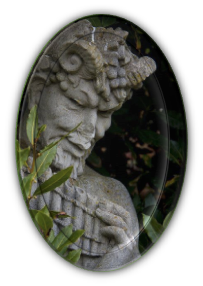
lilac stems.
Credit: Karen Herd on Tumblr & Pinterest
As one version of the story goes, Pan – who sports the hindquarters, legs, and horns of a goat – was besotted with a lovely nymph named Syringa. She, however, was intent on protecting her virtue from this eternally lusty satyr. One day, as he was pursuing her through the forest, she turned herself into a lilac shrub to escape him. (The word panic ultimately derives from the god’s name. Now I wonder why that might be?)
Pan found the sweet-scented lilac shrub, all that was left of his beautiful water nymph. As he kissed and mournfully sighed over the reed-like tubes of the young plant a melodious sound was created. Apollo suggested he bind seven of the tubes together in differing lengths and the first pan pipes were created, also known as the Syrinx. In this way Pan could keep her by his side forever more. Most depictions of him in the art world have him playing his seductive “pan pipes” or, perhaps, a flute. Syringa’s name comes from the Greek word for hollow tube, “syrinks” – and that’s where the lilac’s scientific name, Syringa vulgaris derives from. (Vulgaris simply means common.)
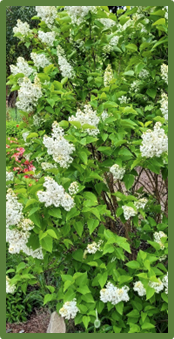
It is fitting that the wood of the lilac is still used for making components for both wind and stringed instruments. You can make one yourself as the pith of young lilac shoots can be easily removed quickly turning the stem into a simple flute. No guarantee, however, that you’ll be able to seduce nymphs of woods and streams if you do make one.
The flower and the heart-shaped leaves are also traditionally used for a wide range of medicinal purposes, including treating parasites, malaria, fevers, rashes, sunburns and minor cuts and scrapes, and anti-aging creams and potions. It is also interesting to note that a “2004 study found that the inability to identify common scents, including lilac, lemon, strawberry and leather, can predict whether patients with minimal to mild cognitive impairment will go on to develop Alzheimer’s disease.”
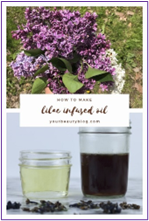
But the main use of lilacs is for its intoxicating scent used for perfumes, soaps, creams, lotions, cosmetics and other scented creations. Unfortunately, today most lilac-scented products are made with synthesized fragrance. The lilac is very difficult to distill so we don’t see it being used as an “essential oil”, as we do with other flowers, such as rose, lavender and jasmine. One way, around this extraction problem is to infuse the flowers in a carrier oil or water. The resulting “lilac oil” or “lilac water” is very lightly scented, but it does capture at least some of the fragrance and medicinal benefits. French apothecaries and perfumers have centuries of experience in creating natural beauty products from lilacs. Please, there is no need for synthetic substitutes if you want to enjoy the fragrant delights of the lilac long past their short flowering season.
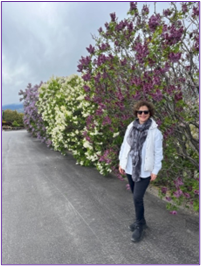
The Okanagan area of south-central British Columbia is renown for its orchards and vineyards. The mild winters, early spring and long hot summers are ideal for ideal for growing many types of fruits, berries and vegetables, including apples, peaches, pears and cherries. Over the past 40 years or so, luxurious villas and wineries have blossomed in the valley bottoms and along the hillsides outside of Kelowna, Penticton, Oliver and Osoyoos each with their own wines, ciders and juices. In many ways the area rivals – or even surpasses – some of the other great beauty spots of the world that also produce such fare – Italy, France and wine country in California. The spectacular lakes, mountains and rivers certainly add to this allure.

It is a surprise then that there is not more mention of the proliferation of lilacs that adorn the region. Perhaps, it is because they are a spring flower that are past their prime by the time tourists and the wine tours start in earnest at the end of May and continue through harvest season in September and early October. But they are missing some of the most spectacular festival of colours this country has to offer.

Lilac bushes and hedges are particularly well established on farms, yards and estates in and around Osoyoos and the nearby town of Oliver in the south Okanagan. A drive or walk almost anywhere in the region is filled with oohs and awes as each flowering bush seems to surpass in beauty the one that came into view only moments before. And then there’s the scent of the lilacs wafting on the warm breezes wafting over this near desert region. One is easily transported back to those pleasure gardens of the sultans where beautiful waters, songbirds and the scent of lilacs graced the air with their beauty and their enchanting perfume.
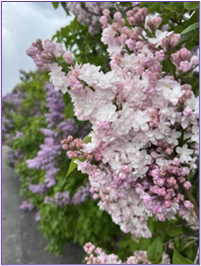
While enjoying the lilacs this spring, I have been thinking a lot about my grandmother, Clara. As we know, scent often triggers memories and feelings and the smell of lilacs takes me back to the lilac growing outside her doorway and the kitchen with its bouquets of lilacs draping onto the kitchen table their aroma filling the house with their fragrance. I feel again the love that filled that tiny house and the stories and laughter that blossomed there.
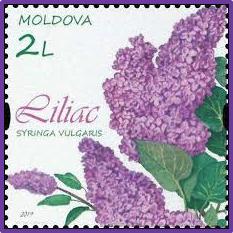
Clara is often in my mind these days as the war in Ukraine threatens the entire region. She was from a historical territory of Eastern Europe called Bessarabia, parts of which are now located in modern Moldova, Romania, and a small part of Ukraine. She was the child of Germans (Falkenburg) sent to Bessarabia by Tsar Alexander I, beginning in 1812. Russia acquired this territory from the Ottoman Empire, after the Russo-Turkish War. He then issued an invitation to Germans, Mennonites, Jews and others to settle in this still comparatively empty region. They were given free lands and religious and military exemptions as incentives to cultivate the rich agricultural lands found there. [SEE: Ruth Anne Taves blogs, about her father and other Mennonite ancestors who also came from this general area.
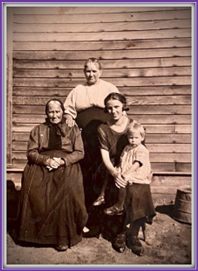
We believe the Falkenburg family lived, until 1905, in a village called Klotzic (sp?), now part of Ukraine. (We haven’t been able to confirm the location, probably because of variations in spelling and complicated changes to the region’s geopolitcal landscape over the years.) When military exemptions were withdrawn, the entire family, with six sons of conscription age, emigrated to Canada. Not long after their departure, the dark shadows of revolution and war gripped the region. And, as we see in the news every day, the people they left behind struggle there still….
Growing up in Ukraine, Clara would have certainly seen lilacs, the most common plant grown in house gardens, public green spaces, roadsides, and landscaping in Ukraine. More than twenty-one different cultivars are on display in the National Botanical Garden in Kyiv and “many travelers come to Kyiv just to take a glance– and whiff– of the country’s magical Lilac.”
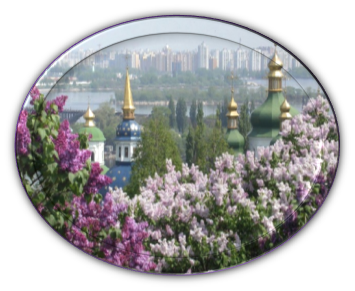
“Kiev is beautiful at any time of year: whether it is the malachite-green finery of summer, the red gold of autumn, or the weightless white winter attire. However, May – the spring flowering season – is a very special time for one of the world’s greenest capitals. This is the time when the ancient city seems very young, jaunty, but at the same time reverently gentle. It smiles to the mild sun, young greens, and the exhilarating fragrance of flowers. This is the time when Its Majesty Lilac reigns over the city, temporarily depriving the major metropolitan lords – Kyiv chestnuts – of the helm of power. Welcome to the audience with the Lilacs!” – Live Journal
Syringa vulgaris can be found growing wild in Ukraine’s woodlands and green hills. Whether they are descendants of native plants, like those found throughout the nearby Balkan region, such as in Moldova, or varieties introduced later by the Ottoman sultans is a bit of a mystery, but the flowers certainly prove popular with both wildlife and people. “When spring comes, moths, bees, and Ukrainians are beckoned to the landscape, drawn by the splendor of emerging brilliant purple flowers and their fresh, calming scent which needs no introduction…”
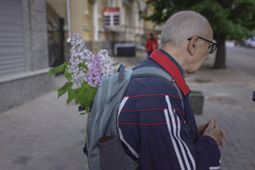
I was very moved with a recent Globe & Mail article, by international correspondent, Nathan Vanderklippe, that spoke of how, even in the midst of war, Ukrainians are still planting flowers and tending gardens both public and private. The observant writer spoke of one 85-year-old man in war-torn Kharkiv who went to a remote part of the Shevchenko City Garden to pick a few lilacs for his home. His purpose for purloining the blossoms broke my heart: “they are really to help keep calm while everything is going on.” A Kharkiv landscape architect explains this primal impulse to find beauty and serenity in the time of fear and uncertainty: “You plant vegetables for practical purposes – for food. When you plant flowers it is for your soul.” [Photo credit and quotation: https://www.theglobeandmail.com/world/article-russia-ukraine-war-kharkiv/]
Here’s a timely quotation that nicely sums up my feelings stirred by those memories of my grandmother and my other Bessarabian and Alberta ancestors:
When we sit at an open window in the still of the afternoon, and look out upon the fragrant lilacs, the blossoming trees, the clambering honeysuckles, the long green grass, half burying the bashful violet from our view, and hear the singing of the joyous birds, and the roar of the city afar off, we can hardly persuade ourself [sic] that there is such a strife and bickering among the inhabitants of this fair earth.
– “Beauties of Creation,” The Literary Garland 1, no. 2 (Jan. 1839): 66.
As I discovered, lilacs traveled along the Spice Road and other ancient trade routes all over the Middle East, Asia and Europe. They were major characters in Greek myths along with gods and river nymphs. Lilacs were featured delights in the perfumed gardens of the sultans in the Ottoman Empire and those of Persia. They were also treasured in France, England and then throughout Canada and America. They are used to bring serenity and comfort in times of stress and war. And they bloom every Spring to remind us that the winter is over, that we are still here, and that life goes on – and that there is still beauty in this sometimes crazy world. They are truly a great blessing.
Quite the exotic journey for this humble Prairie favorite. All this wandering the world just so they could eventually grace my grandmother’s doorway and kitchen back in Evansburg – In the Time of Lilacs.

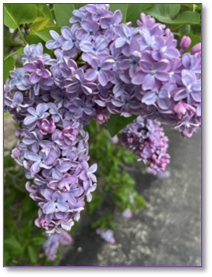
CREDITS & THANK YOUS: With gratitude to Ruth Anne Taves and her patient coaching and mentoring as I stumble through this new found found realm of blogging. Any good work evident here is to her credit – all the errors, as well as aesthetic and technical issues, etc. are mine alone. (I wish I could blame someone else.) And also thanks to my sister Joan who contributed the beautiful cover photo of the lilac blooming under the blue Alberta skies. She has a seemingly infinite library of excellent photos that she has taken herself. In addition, she has the uncanny ability to instantly pull photos out of thin air – her own but also those from the family archives, of which she is the keeper. I ask her for a historic photo of a family lilac tree and out pops a pic of me on my first birthday – in front of a family lilac – a picture I have never seen before. Sheer sorcery!





One Comment
Ruth Anne Taves
Wonderful blog, Wayne! A fantastical weaving of memories, family history, botanical details, geography and history. And of course, beautiful photos of those gorgeous lilacs, one of my most favourite flowers on earth. 💜